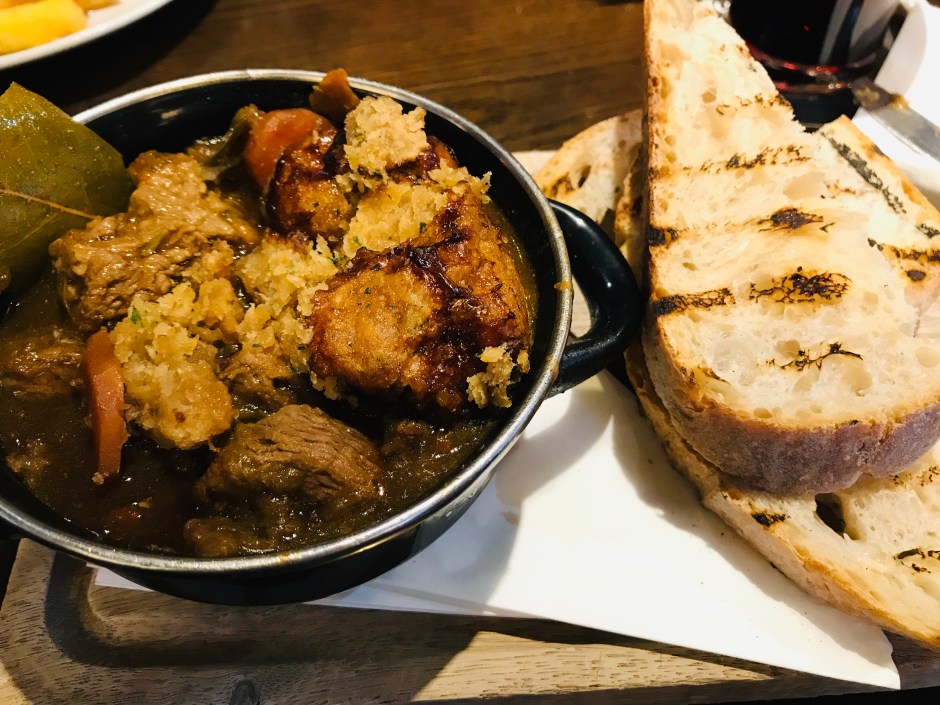
We’ve reached the time of year when all I want to eat is comfort food: big bowls of soup, homemade pasta, and slow-cooked everything. Winter food, basically. So I’ve decided to write three separate posts about three of some of my favorite cold weather recipes that I picked up during my travels. Each one is a regional recipe from a place that I’ve traveled to and loved, and I’ve decided to start with this deliciously hearty Beef and Guinness Stew.

Last year we spent Christmas in England with my husband’s family and, as with all of our visits, we spent a day in the Lake District – given its name because of all the…well, lakes. It’s one of the places I look forward to visiting the most during our stays because of how distinctly beautiful it is. It’s the home of many writers such as Beatrix Potter, Ernest Hemingway, and William Wordsworth, and you can easily see why almost any writer could find inspiration in a setting like this one.
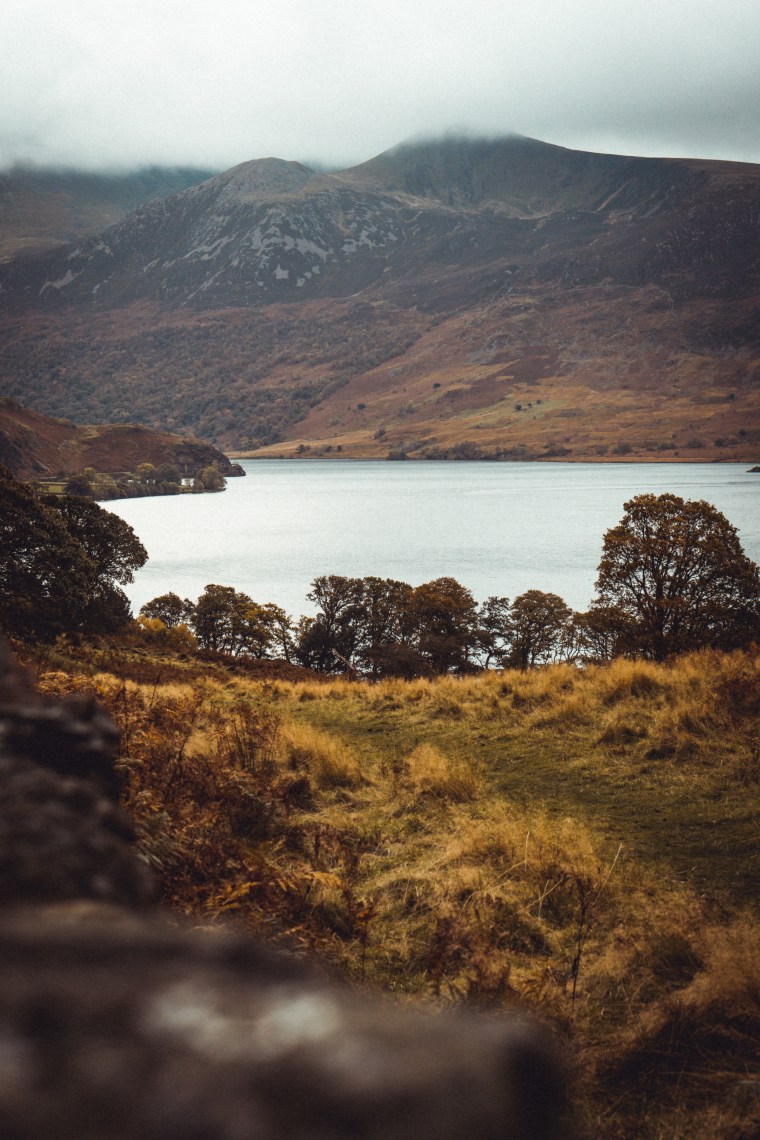
When we spend a day in the Lake District we usually pack up a picnic for lunch and plan a route that will take us through about three or four villages. Here are some of my favorites:
1. Hawkshead
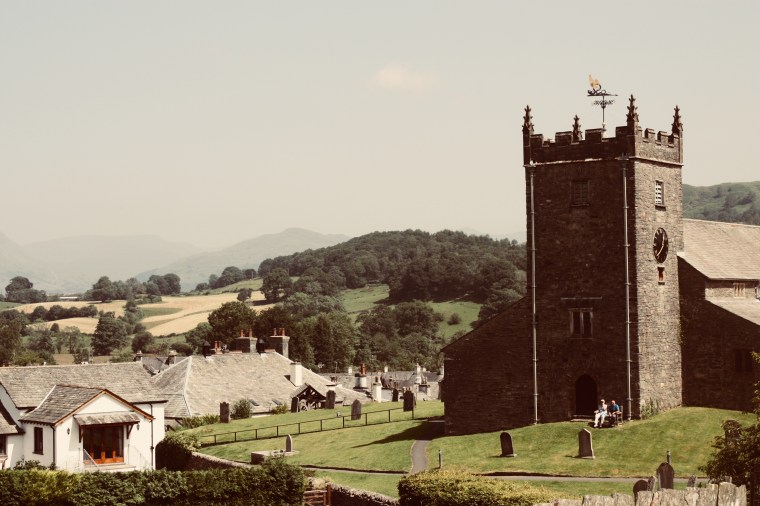
Walking through this village will make you feel as if you’ve stepped back into the 1500s, mostly because much of what you see actually dates back to that time period. The town is laid out in a small network of alleyways, lined with hanging baskets of bright red and yellow flowers, that empty into cobblestone village squares filled with shops, cafes, and pubs that seem to have at least an 80% chance of being called The Red Lion.
Standing at the top of a hill, overlooking the old town, is the even older church. It was originally built in the 1300s and then refurbished in the 1500s. If you step inside you can smell the passing of time in the old wooden beams and find names of people from the village carved into memorials from hundreds of years ago. There’s humility to be found in walking through a space that was made by people long since deceased, but whose work still stands more strongly that most buildings made today. And to know that you’re standing in a room where people have been coming to worship, lifting up songs to God, for years and years.
If you continue on the path leading away from the church and away from town you’ll find a bench that offers a perfect spot to sit and have that picnic you packed and to take in the beautiful view in front of you. It’s a view that is more special to me than most, because it’s the view I was looking at when my husband proposed to me. It’s a view we revisit every time we visit England. The path continues for about a mile through the fields surrounding the town and eventually loops back into the other end of the village. If you’re planning on staying for multiple days in the Lake District, you could make this small town one of your places to stay the night. There’s a small inn close to the one parking lot in town called The Sun, where you can stay in a room furnished with a four-poster bed and have a full English breakfast awaiting you in the morning.
2. Ambleside

Ambleside is a much larger town than Hawkshead. If you’re wanting to do some shopping while in the Lakes, you’ll find a larger selection of stores in this town. The Lake District is known for having a vast number of hiking trails, which anyone visiting should absolutely plan on incorporating into their visit. There are several trails that begin in Ambleside, one of which takes you to a waterfall in the forest above the town. You’ll want to make sure that you’ve worn the appropriate footwear though. There’s a good reason why every village in the Lake District has at least one store selling outdoor gear. Probably the most notable landmark in Ambleside is the Bridge House, which likely served as a store at one time but is now used as an information center.

3. Grasmere
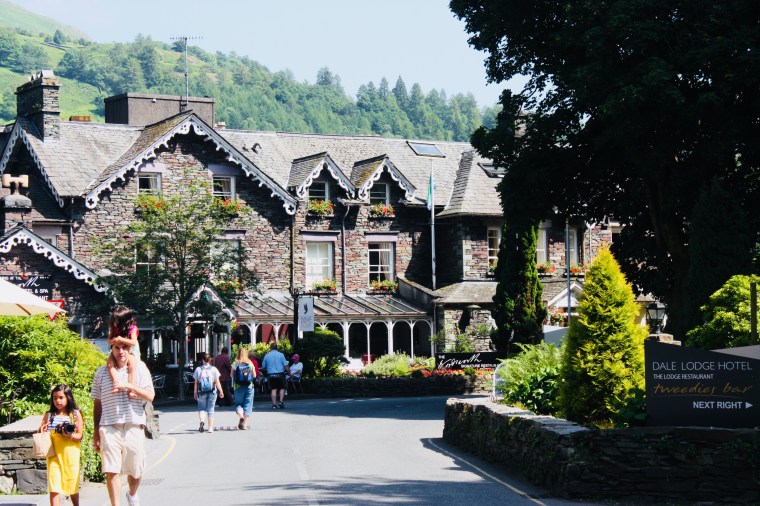
This quaint village was deemed “the loveliest spot that man hath ever found” by poet William Wordsworth, and the first time that I laid eyes on it I could immediately see why he felt that way about it. The village sits along the Rothay River which flows into a lake nearby, which is possibly where the name of the town comes from as mere is another word for lake. Combined with the prefix it could mean a grassy area next to a lake, but knowing this doesn’t in anyway add to your experience so let’s just move on…

There’s a small bookshop on the corner across from the small grassy park in the center of town. If you’re planning on being in the Lake District for a few days and doing some hiking, I’d suggest stopping in and buying one of their many trail guides. Be warned though, some of the longer trails can run a bit off the beaten path with directions like “pass by the old church and walk until you see an old turn gate.” Which would be perfectly fine if you were walking on a road. Less obvious when you’re actually in the middle of a field. But that’s what I love about the Lake District. They accept that theirs is a beautiful place in this world that many people want to visit, but they aren’t changing anything because of it.
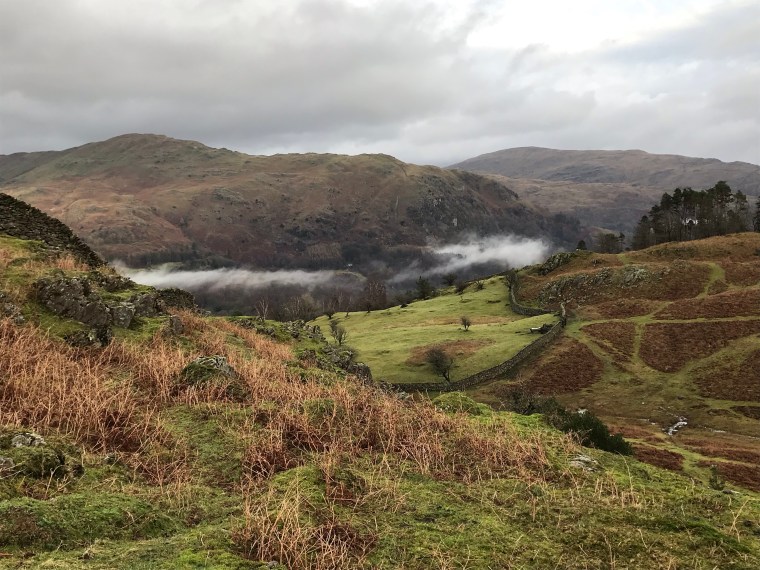
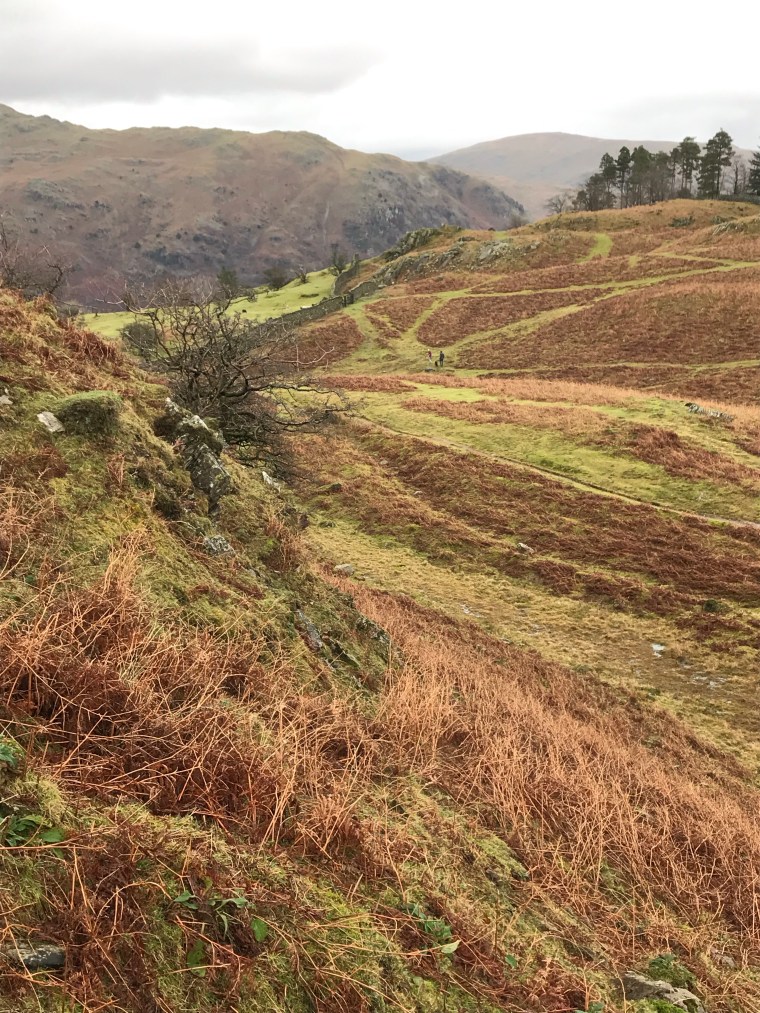
We also love stopping in the Grasmere Tea Garden for a little afternoon snack. The small cafe has an outdoor patio in the back that borders the river making it the perfect spot to rest for a bit before going on one of those hikes. Below are some pictures of a hike that Jamie and I took when we were in the Lakes at Christmas.

Which brings us back to the recipe portion of this post. Imagine you’ve been out hiking. It’s been a cold day, maybe even a bit rainy (It is England, after all). It’s getting dark, but as you’re coming to the end of your long hike you see the village up in front of you. And as you walk back into the village you spot the local pub with warm light spilling out onto the street in front of it. You walk in, nod to the genial group of people around you, sit down, and order a big bowl of warm, delicious stew. And then the moment finally comes. Your stew is in front of you, steaming, and smelling so so good. It’s full of big chunks of beef, carrots, and onions in a thick Guinness gravy. And they’ve given you a hunk of warm, fresh bread so that you can soak up every last drop.
Hungry yet? Go thee and make yourself this stew. You’ll be happy you did.
Beef and Guiness Stew
Makes 6-8 servings
Ingredients:
3 lbs beef chuck
salt and pepper
2 onions, chopped
4 cloves of garlic, minced
5 medium carrots, peeled and chopped
2 stalks of celery, chopped
3 T flour
4 T tomato paste
1 T worcestershire sauce
16.9 oz Guiness beer
4 C chicken stock
3 Bay leaves
2 t thyme
Heat about 2-3 tablespoons of olive oil in a dutch oven or large pot over medium high heat. Cut the beef chuck into 1.5in chunks and dust evenly with salt and pepper. Place the beef chunks in the pan in batches and cook, turning each piece until all sides are browned. Once you’ve browned all the meat, set it off to the side until later. If needed, add a bit more oil and then add the onions and garlic. Allow to cook for 5 minutes, stirring occasionally. Add the carrots and celery and cook for an additional 5 minutes, then stir in the flour and cook for 1 minute more. Next, stir in the tomato paste and worcestershire, and then add the remaining ingredients as well as the beef chunks that you set aside before. Bring everything to a boil and then reduce heat to a simmer and cook, covered for 2.5 – 3 hours or until the meat is tender. Stir occasionally. The stew should be nice and thick! Remove the bay leaves before serving. Serve with a hunk of thick, crunchy bread. The picture I took includes a small amount of dumplings on tops of the stew, but I left those out of this recipe since I find that having the bread to dip into the stew adds enough to fill you up. Enjoy!
 everyday CHARLESTON