
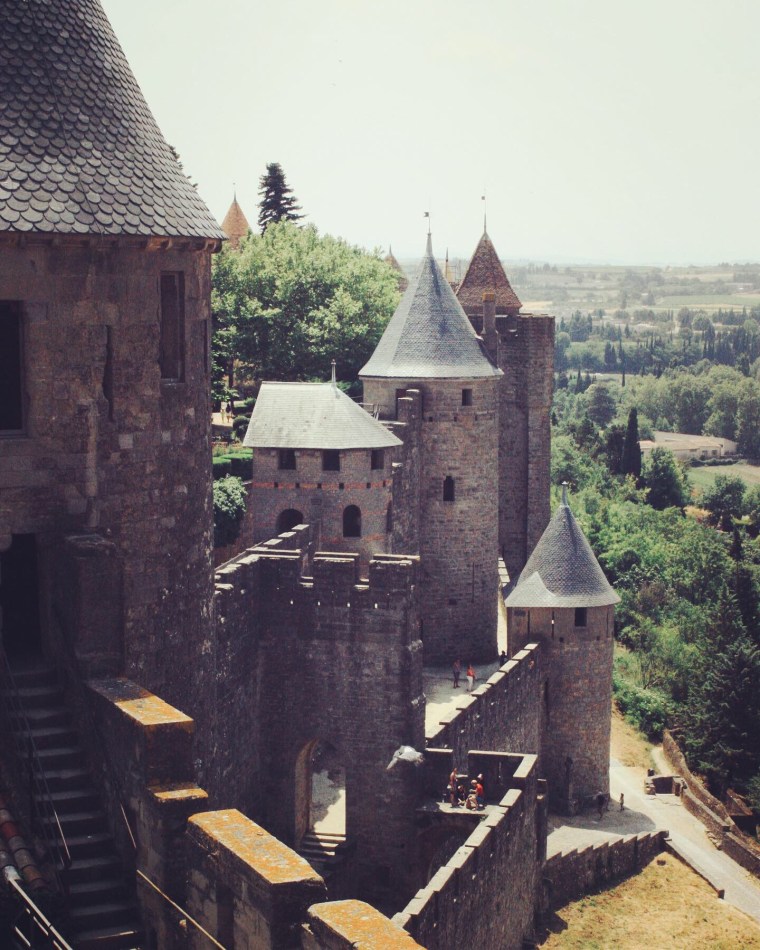
I honestly don’t think that I’ve ever been anywhere more whimsical than Carcassonne. Allow your brain for a moment to conjure up the images of castles, knights, princesses and dragons. Imagine walking down the cobbled streets of a medieval village or wandering through the town market surrounded by the sounds of village life and the smells of fresh bread and smoked meats. Now do a quick Google search of Carcassonne and bask in the knowledge that such a place still exists. It’s a real town, with a real castle, built during the days of real knights.
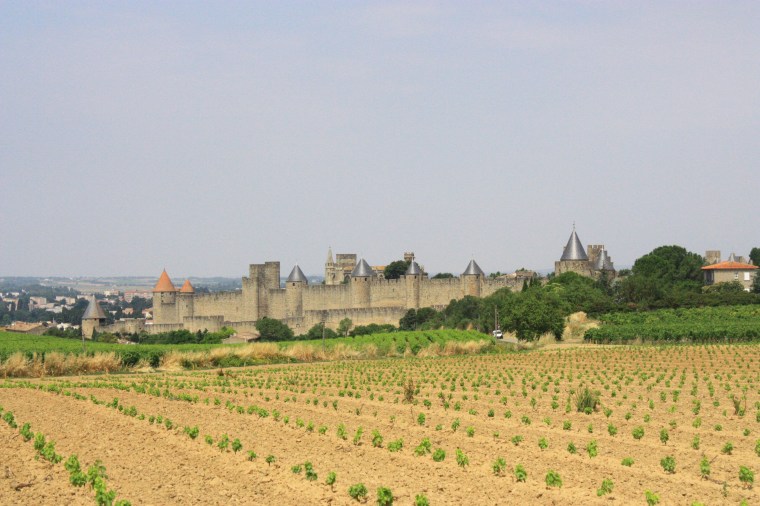
Luckily for all of us who secretly wish that we could travel back in time and experience life in a medieval village, Carcassonne has gone to great lengths to preserve its history. The town is split into two parts: the old town (La Cite) which is completely walled and sits on top of a hill, and the “new” town outside of the walls. Although, using the term “new town” is a bit of a stretch in my book since it actually dates back to the 1300s. I’m used to seeing towns boast “historic downtown centers” that were created in the 1950s. Anyways, in order to preserve the old town, cars are not allowed inside the walls unless they belong to someone who lives there. This isn’t done to try to discourage visitors from coming. It just wouldn’t be practical, or appealing for anyone, to have tons of cars trying to squeeze down the tiny cobbled streets that sit between the medieval buildings. So for us tourists, there’s a place to park our rental car just outside the walls, allowing you to approach the bridge into Carcassonne by foot as people have been doing for hundreds of years. Yes, that’s right. There’s a bridge, which stretches across an actual moat (albeit, a dry one now), that leads through a gate into a real life fairytale.
If you’re bewitched already and have decided that you need to start planning your own visit, then you’ll find the information I’ve put together below especially useful:
Getting There
When we went, we flew into Béziers from Manchester, England on Ryanair and then rented a car to drive to Carcassonne. If you’re not familiar with Ryanair, it’s a budget airline that operates throughout most of Europe. It’s a basic flight, but if you’re flexible you can find flights for insanely cheap. Our flight from Manchester (round trip) cost in the neighborhood of $60, though I’ve seen flights as cheap as $10 if you can book last minute. Carcassonne has an airport of its own, but Ryanair doesn’t fly into it every day so you’d have to plan your trip accordingly. If you’re flying from London or Paris with Ryanair (potentially as part of a multi-destination flight), then flying into Béziers is your best option.
There is a definite benefit to renting a car regardless of where you fly into because it allows you to also visit the surrounding countryside which is absolutely stunning. If you’re not interested in getting behind the wheel in a foreign country, however, then you can always opt for the train. Europe’s rail system is phenomenal and can get you to just about anywhere you want to go.
Where To Stay
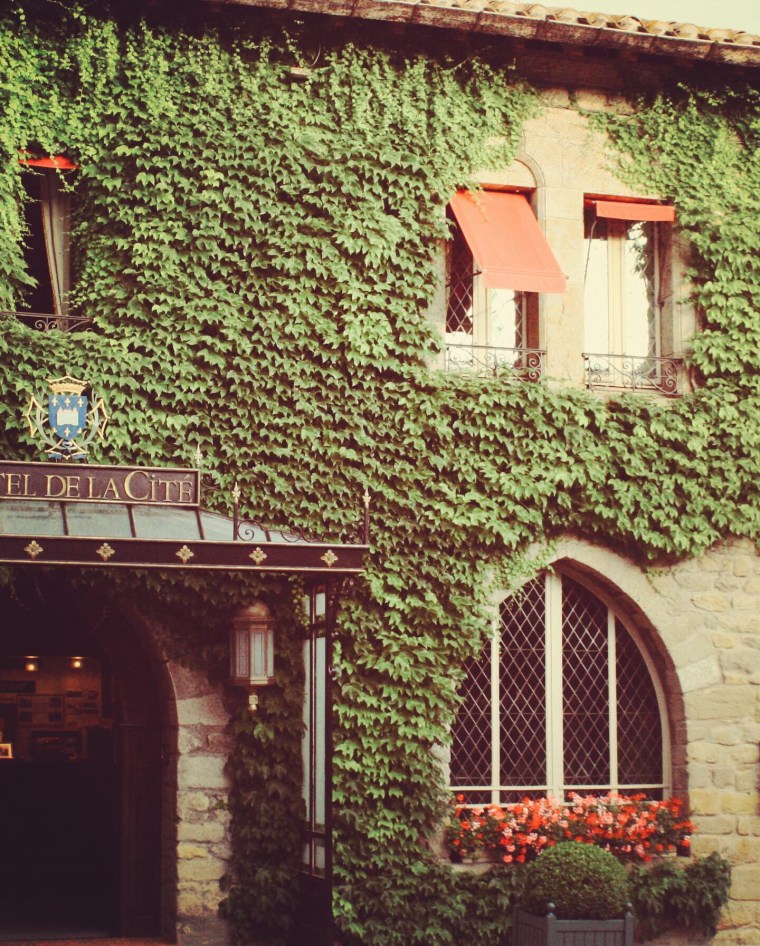
If you want to stay inside the old town and can afford to splurge a bit, then Hotel de la Cite is the way to go. The building and grounds are absolutely beautiful. It is, without a doubt, the kind of place you’d always remember. If you’re looking for something cheaper, then the Best Western Hotel le Donjon offers a great option. It might not be as pretty on the outside as Hotel de la Cite, but it’s very charming on the inside. My favorite feature was a small library off of the lobby that offered a great place to sit and enjoy a cup of coffee in the evening.
If you’re not bothered about staying inside the walls of the old town, then Hotel Les Trois Courronnes is even cheaper still but offers great views of the walled village from its courtyard along the river. It makes for a fantastic setting while eating your breakfast!
What To Do
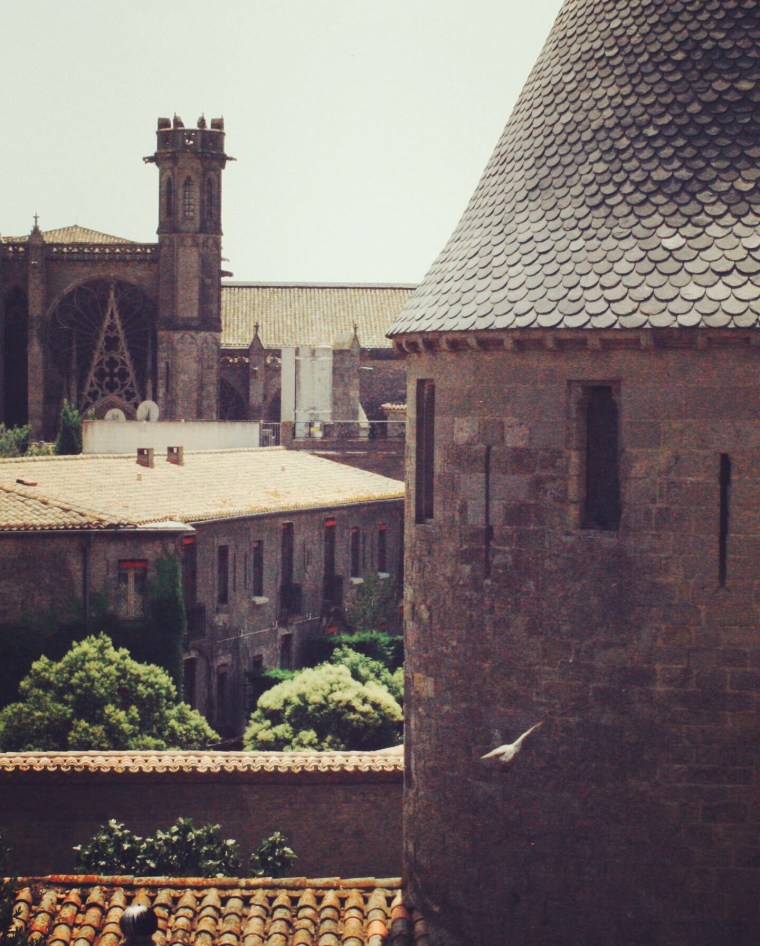
I should mention that Carcassonne isn’t very big. It’s very walkable, and everything that you’d want to see and do can be seen and done in a day or two. Outside of simply having a good wander around the old village, there are three main attractions you’ll want to take in: walking the city walls, touring the Chateau Comtal (the castle) and going inside the cathedral. Everything is free aside from going inside the castle which costs €7 if you’re 26 or younger, and €9 otherwise. It’s a reasonable price given that you can spend 2-3 hours inside the castle and it includes an impressive exhibit on the restoration of the walled city.
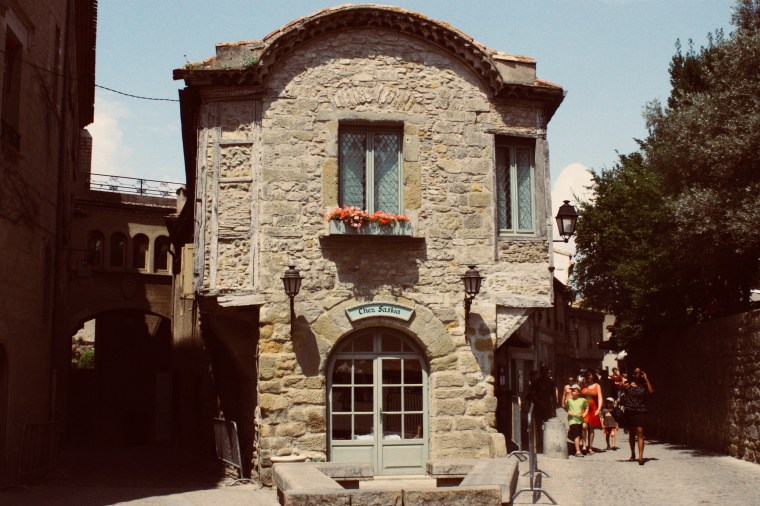
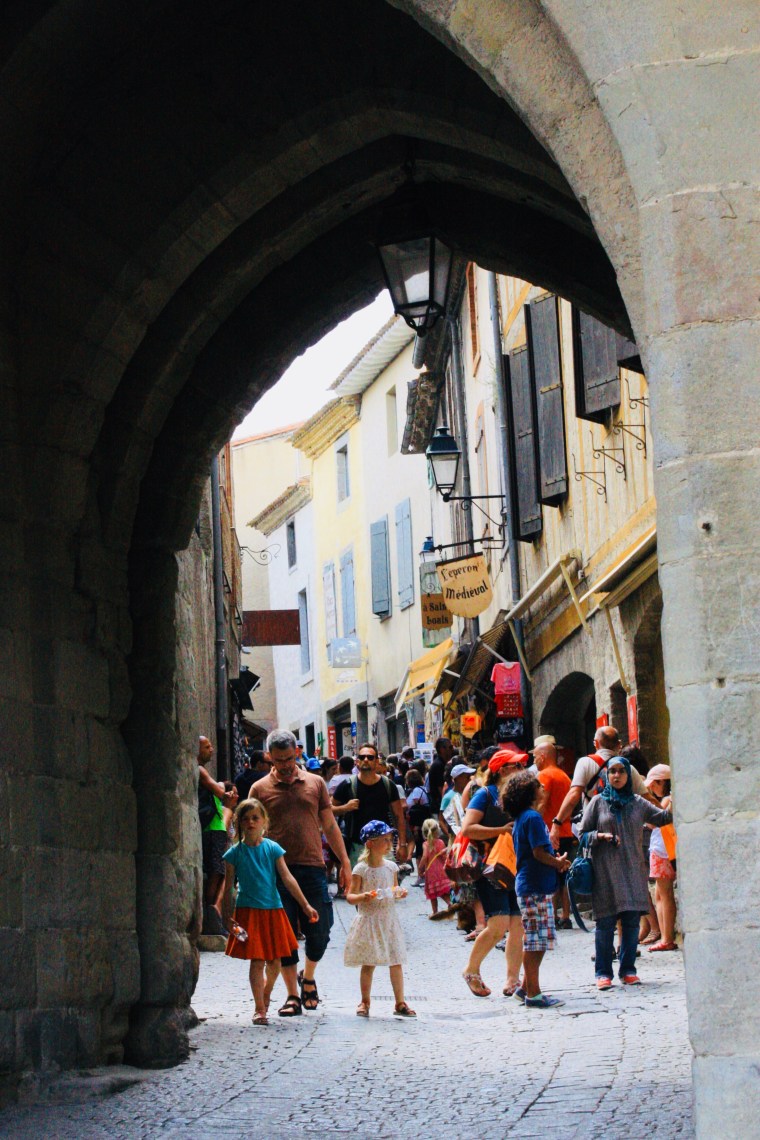
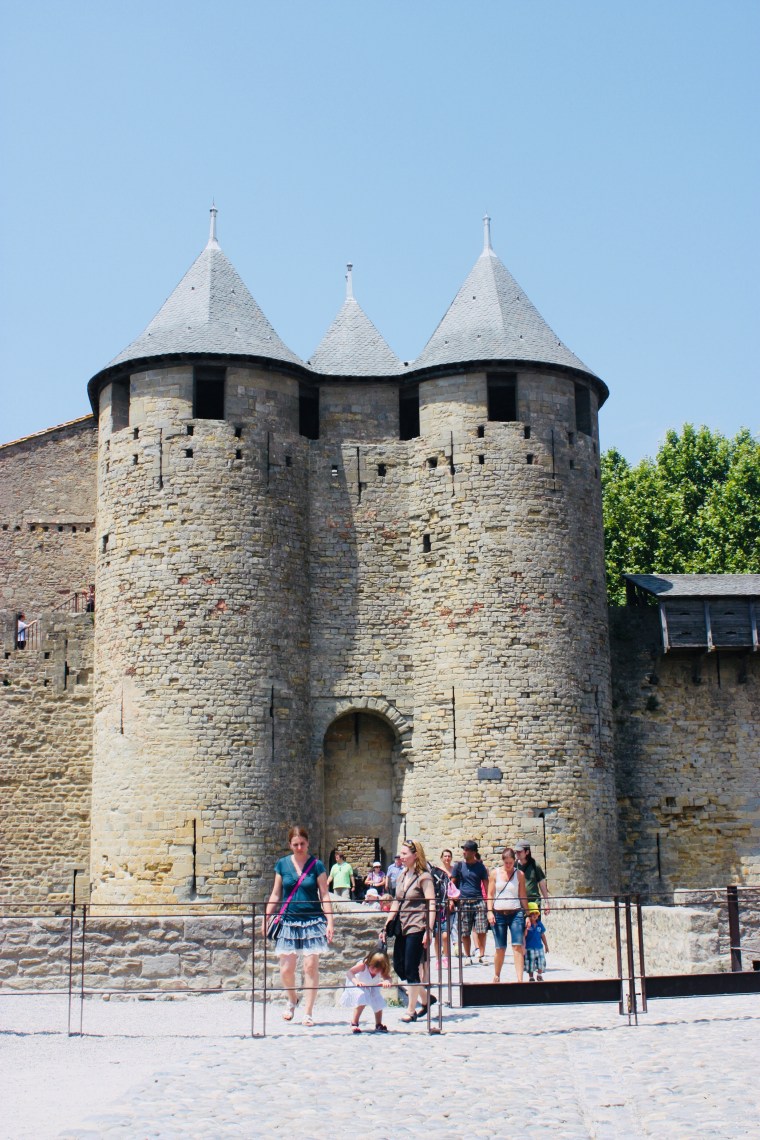
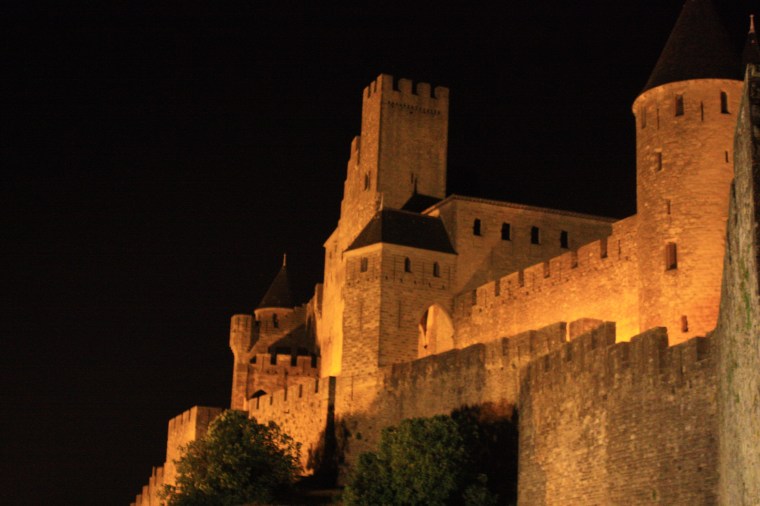
I would also recommend, not just in Carcassonne but in any city, taking a walk at night. A strange metamorphosis occurs when the sun goes down: stores close, restaurants reopen for the dinner rush, the natural light of the day is replaced by the warm glow of the evening, and the locals emerge after their day at work. The city transforms from a place that is being visited, to a place that is being lived in. In Carcassonne in particular, as the city gets dark, the castle lights go on, and the walls and turrets take on a beautiful glow that no photo can do justice to. Although I have included a picture, just to give you an idea:
Because Carcassonne only requires a couple of days to take in, I would recommend making it part of a multi-destination trip. Another city worth looking into, and one I plan to devote an entire separate post to, is Nîmes. You can easily spend 3-4 days in Nîmes and then spend another day visiting the nearby Pont du Gard, an incredibly impressive Roman aqueduct. Hundreds of locals and tourists visit the Pont du Gard everyday, not only to see the structure itself, but also because the river beneath it is a popular swimming location.
What To Eat
One word: Cassoulet. You’d be hard pressed to find a restaurant that doesn’t serve it and you really shouldn’t leave Carcassonne without trying it because the region is known for it. Which means it’s bound to be good. It’s one of those simple, hearty dishes that is designed to fill you and warm you, but doesn’t care about looking pretty. And it has the added benefit of being a fairly simple meal to replicate because it contains only a handful of ingredients, but ingredients that have been slow cooked to bring out lots and lots of flavor. If your family, like mine, has ham and beans on New Year’s Day, then you’ve had a meal somewhat similar to cassoulet. Imagine a bowl full of slow cooked white beans, sausage, and chunks of either duck (traditional recipe) or chicken. That is cassoulet. And it’s delicious. And a perfect recipe to add to your winter weather dishes. I’ve created a quick version of this dish that still packs tons of flavor but can be finished and on your plate in less than an hour.
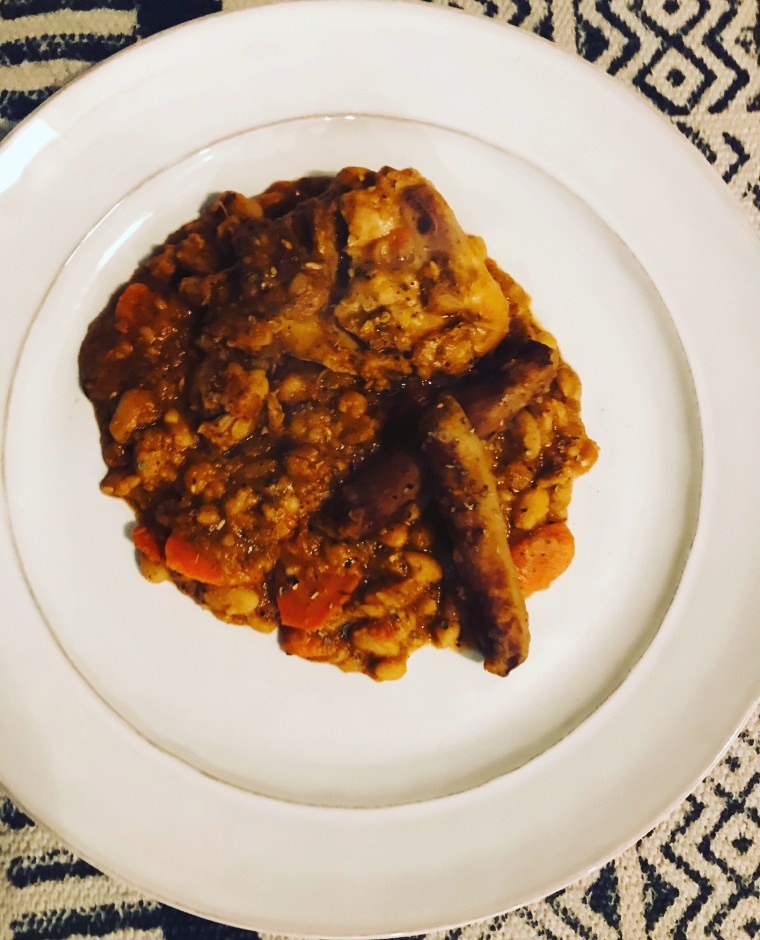
Cassoulet
Serves 6
Ingredients:
6 – 8 chicken thighs
6 large pork sausages (or 12 – 14 small sausages)
4 15oz cans of cannellini or great northern beans, drained and rinsed
1 large onion, diced
4 medium carrots, peeled and sliced
4 garlic cloves, minced
2 T tomato paste
1 C dry white wine
1 1/2 C chicken stock
1 t thyme
2 bay leaves
salt & pepper
Preheat the oven to 350.
Heat a tablespoon of olive oil over medium heat in a Dutch oven. Add in the sausages and cook until nicely browned on all sides, and then remove to a plate. Next, add the chicken thighs, season with salt and pepper, and likewise cook until browned on each side before removing to the plate. You don’t need to cook them all the way through, as they will finish cooking in the beans later.
Add the carrots and onions and cook for 4 minutes, then stir in the garlic and cook for 1 minute more. Pour in the white wine and use a wooden spoon to scrape all the crispy bits off the bottom of the pan. Mix in the tomato paste, chicken stock, thyme, and bay leaves and allow the mixture to cook down for 3 – 4 minutes. Stir in the beans and add the chicken and sausage back in the pot. Bring to a boil and then simmer for 10 minutes.
Cover the Dutch oven and finish cooking in the oven for 25 minutes. Remove the bay leaves and add salt and pepper to taste. Because I live in the south, I recommend serving this with a side of collard greens and corn bread! Bon appetit!
 everyday CHARLESTON